
We build in Sydney, South Coast (Wollongong) & Central Coast NSW

Granny flat rules in Canterbury-Bankstown

Canterbury-Bankstown allows granny flats up to 60 m² on blocks of at least 450 m², the same as the rest of NSW. What is different here is a clause in the council’s own plan that lets a granny flat exceed 60 m² on a large enough property, a developer contribution charged by bedroom count, and 2 entirely different sets of council rules depending on which side of the old council boundary you sit.

This page covers what Canterbury-Bankstown adds on top of the state rules.
Check My Property Eligibility

Takes 60 seconds. No obligation.

Builder Licence 247388C
HIA member
HIA GreenSmart
In-house approvals, not outsourced
NSW Fair Trading

Which suburbs this covers

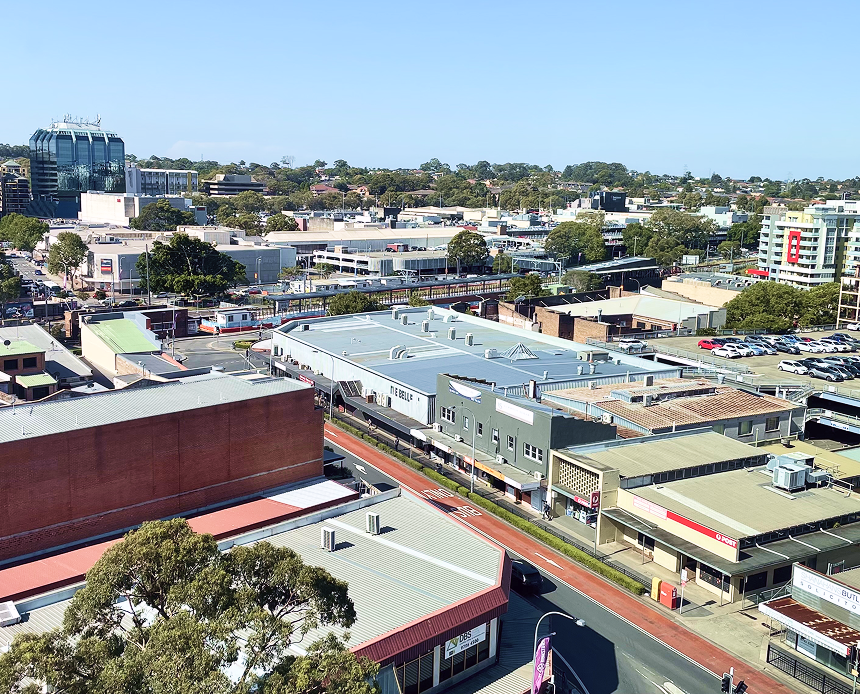
Canterbury-Bankstown is one of the largest councils in Sydney. The suburbs we build in most often are Bankstown, Padstow, Panania, Revesby, Milperra, East Hills, Yagoona, Chester Hill, Campsie and Belfield.

Five more suburbs sit partly in Canterbury-Bankstown and partly in a neighbouring council: Beverly Hills, Kingsgrove, Narwee, Riverwood and Greenacre. On those, which council you deal with depends on your actual address, not the suburb name. Worth checking before you assume.

Our office is in Padstow.

First, which approval are you actually going for

This decides which of the rules below apply to you, and most granny flat pages never tell you.

About 9 out of 10 granny flats are built on the fast pathway, called complying development. A private certifier checks your plans against a fixed state checklist and issues the approval. Council is not involved in the decision.

The other 1 in 10 goes to Council as a development application, usually because something about the block fails the checklist.

The difference matters more than people realise:

Fast pathway (complying development)
Council pathway (development application)
Who decides
A private certifier
Canterbury-Bankstown Council
What they check against
The state Housing SEPP checklist
The council’s LEP and development control plan
Does Council’s DCP apply?
No
Yes, in full
Can it be refused if you comply
No
Yes, it is assessed on merit
Typical timeframe
Weeks
Months
Developer contribution
Payable, before work starts
Payable, before your construction certificate

Read the DCP row again, because it is the one that catches people. Every setback, roof pitch, private open space and sunlight control further down this page comes from Canterbury-Bankstown’s development control plan. None of it binds a private certifier. If you are on the fast pathway, a builder quoting you council DCP setbacks is quoting the wrong rulebook.

What does apply on the fast pathway is the state checklist, and that is the same in Padstow as it is in Penrith. The council specific rules on this page matter most if you end up at Council.

A note on flood. We have deliberately not claimed this suburb is clear. The state planning maps carry flood data for only a small number of councils, so an empty result proves nothing. Your Section 10.7 certificate is the document that answers it.

The size rule that is different here

Everywhere in NSW the default cap on a granny flat is 60 m². Canterbury-Bankstown is one of the councils where that is not always the final word.

Clause 5.4(9) of the Canterbury-Bankstown Local Environmental Plan 2023 says the floor area, not counting parking, must not exceed whichever is the greater of:

60 m²

OR

10%

of the total floor area of your existing house

The second option only beats the first if your house is larger than 600 m². That is a very large home, so on the overwhelming majority of blocks the working number is still 60 m².

Which pathway can use it. This clause is confirmed for a development application to Council. It has not been confirmed on the fast complying development pathway for Canterbury-Bankstown, and a private certifier may well not accept it.

Since about 9 in 10 granny flats here go the fast way, the practical answer for most people is that 60 m² is the number. If you have a house over 600 m² and you want the extra space badly enough to accept a council application and the months that add, it is worth asking a certifier and Council before you design around it.

It is still worth knowing the clause exists. On a large property it is the difference between 60 m² and something bigger, and it is not something most builders will raise with you.

What it costs the council to say yes

A section 7.11 developer contribution applies. Secondary dwellings are already discounted by half under the contributions plan, on the basis that they often house extended family.

The amount is set by bedroom count, not floor area.

The difference matters more than people realise:

Granny flat size
Most of the LGA
Bankstown City Centre
Campsie Town Centre
Studio or 1 bedroom
$5,638.72
$6,262.44
$6,210.76
2 bedroom
$9,030.12
$10,028.80
$9,945.87
3 or more bedrooms
$12,236.45
$13,589.65
$13,477.89

Figures published by Canterbury-Bankstown Council for the June 2026 quarter. They are indexed every quarter against Sydney CPI, so confirm the current rate before you budget. Payable before your construction certificate is issued on the council pathway, or before work starts on the fast pathway.

The practical consequence: going from a one bedroom to a 2-bedroom granny flat adds about $3,400 in contributions before you have added a single dollar of building cost. Worth factoring in when you are deciding on size.

Two councils in one

This is the quirk that catches people, and it is worth understanding before you start.

Canterbury-Bankstown was formed by merging the former Bankstown and Canterbury councils. The LEP is now one document, but the development control plan is still 2 separate chapters, and they treat granny flats very differently.

Former Bankstown area
Former Canterbury area
Detail level
Detailed and prescriptive
Very thin
Minimum lot size control
450 m² stated in the DCP
No equivalent control found
Setbacks
Specific figures given
Not specified
Frontage
Not specified
Merit assessment against a 2009 policy

Padstow, Panania, Revesby, Milperra, East Hills, Bankstown, Yagoona and Chester Hill are in the former Bankstown area. Campsie and Belfield are in the former Canterbury area.

If you are in the former Canterbury area, expect more case-by-case assessment, particularly on frontage. The policy the council still refers back to was written in 2009 and sets no numeric frontage figure.

Council pathway only:
the controls that catch people out

Everything in this section comes from Canterbury-Bankstown’s development control plan, which means it applies only if you go to Council. A private certifier issuing a complying development certificate does not apply any of it. If you are among the 9 in 10 going the fast way, read this for context rather than as your rulebook.

These controls apply in the former Bankstown area.

Your house has a floor area budget, and the granny flat comes out of it. The council will not consent unless the combined floor area of the house plus the granny flat stays within the maximum allowed for a dwelling house on that land. If your house already uses most of its allowance, a 60 m² granny flat may not fit even on a large block.
This one blocks projects that look fine on paper.
Single storey and 3 m wall height for a detached granny flat.
No attic, no basement, and a maximum roof pitch of 25 degrees.

Setbacks for the council pathway: 5.5 m from the primary street
3 m from a secondary street, 0.9 m to side and rear where wall height
is 7 m or less.

The existing house has to keep its own private open space and parking. A granny flat that leaves the main house short of either
will not be approved.

Sunlight. At least one living area in the granny flat needs 3 hours of sun between 8am and 4pm at midwinter. Half of the main house’s private open space and half of the neighbour’s must keep 3 hours between 9am and 5pm at the equinox.

Trees are not automatically removable. Council’s tree rules normally exempt trees within 3 m of an approved dwelling. That exemption specifically excludes secondary dwellings, so being close to your new granny flat does not give you a free removal. Significant trees may also force the granny flat to be redesigned or made smaller

Heritage conservation areas have their own dedicated section.
A detached granny flat must be single storey, behind the house,
not visible from the street, and at least 6 m from the main dwelling. Dormer windows are not permitted.

Check My Property Eligibility

Is there a bedroom limit?

No. There is no bedroom cap in the Canterbury-Bankstown development control plan.

Several granny flat websites state a 2-bedroom maximum applies in this council area. We could not match that claim to any control in either DCP chapter.

Bedrooms do matter for one thing though, and that is the contribution table above.

Granny flats we have built in
Canterbury-Bankstown

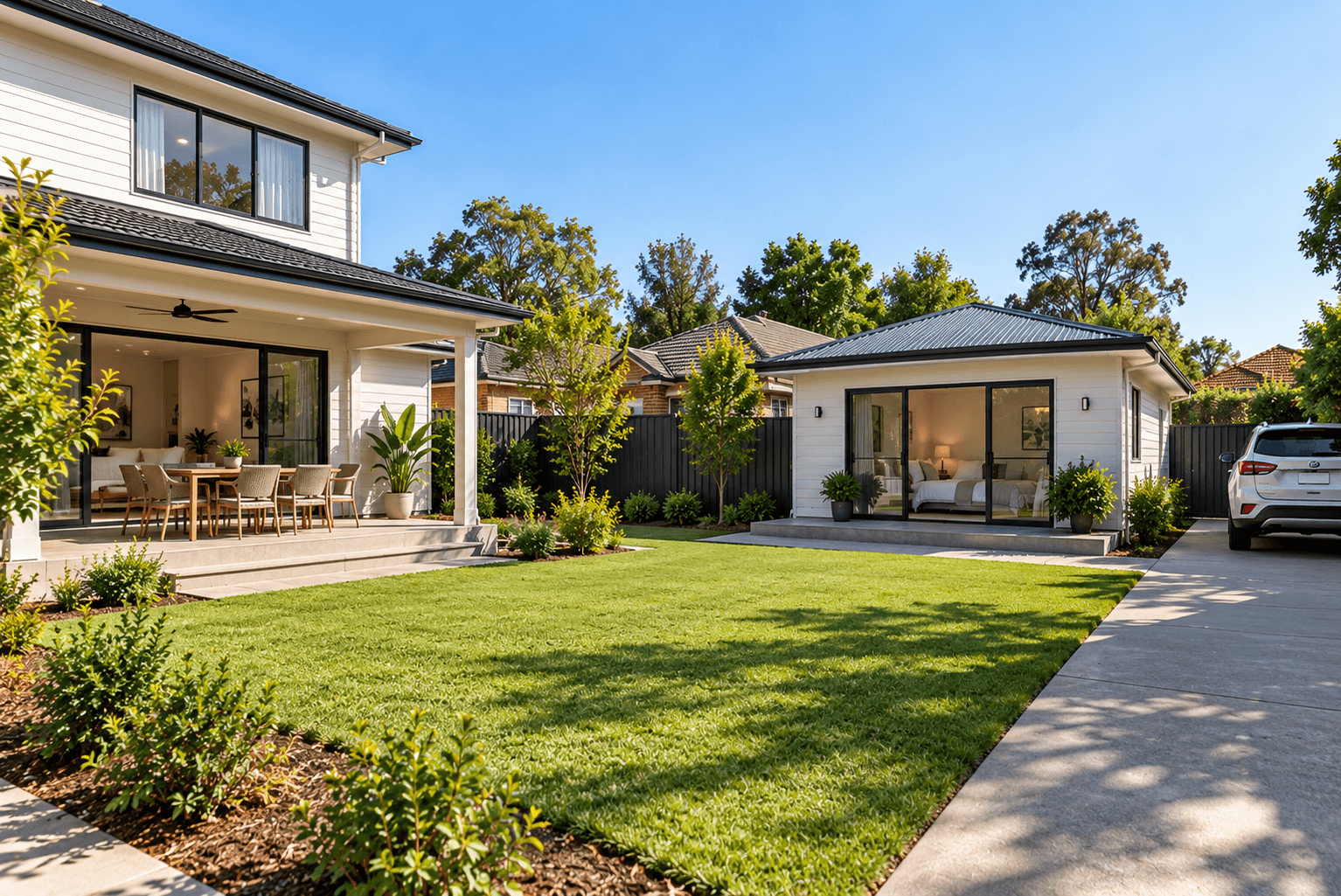
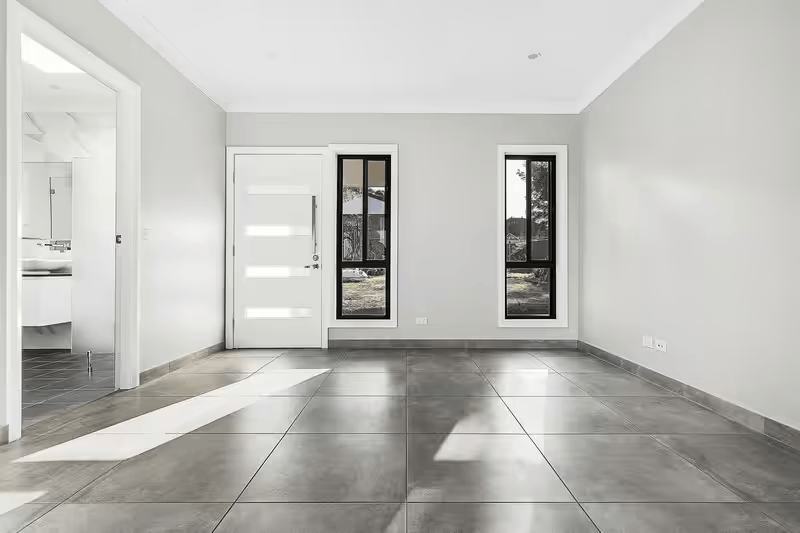
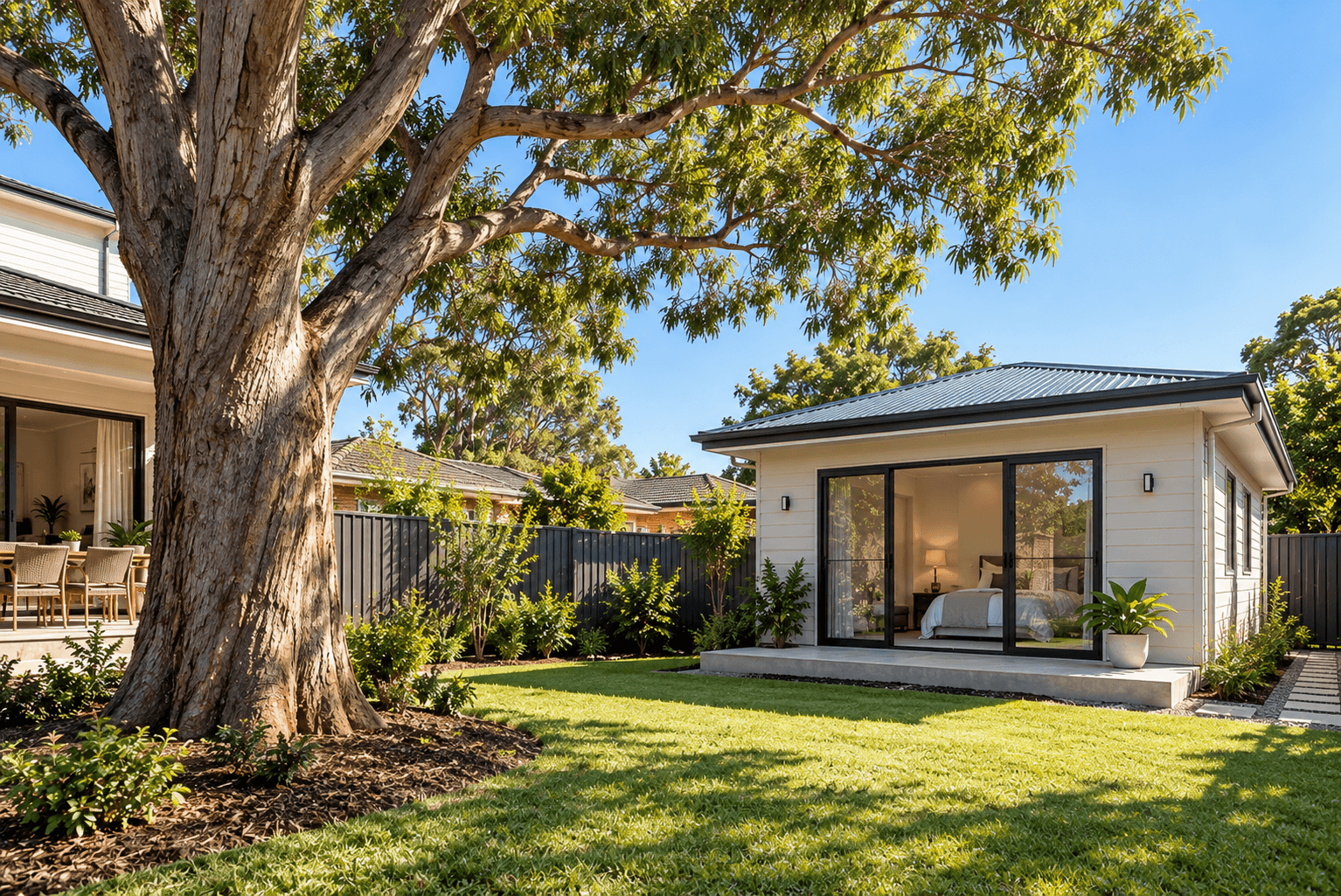
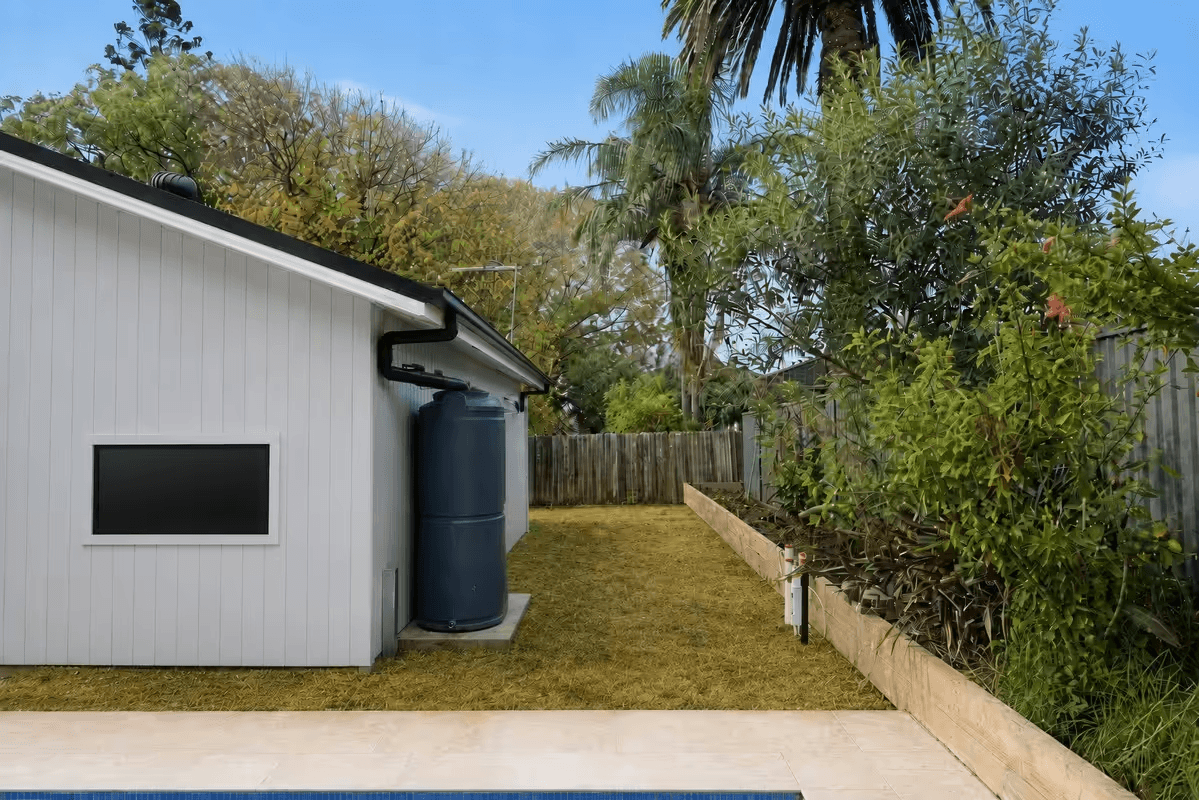
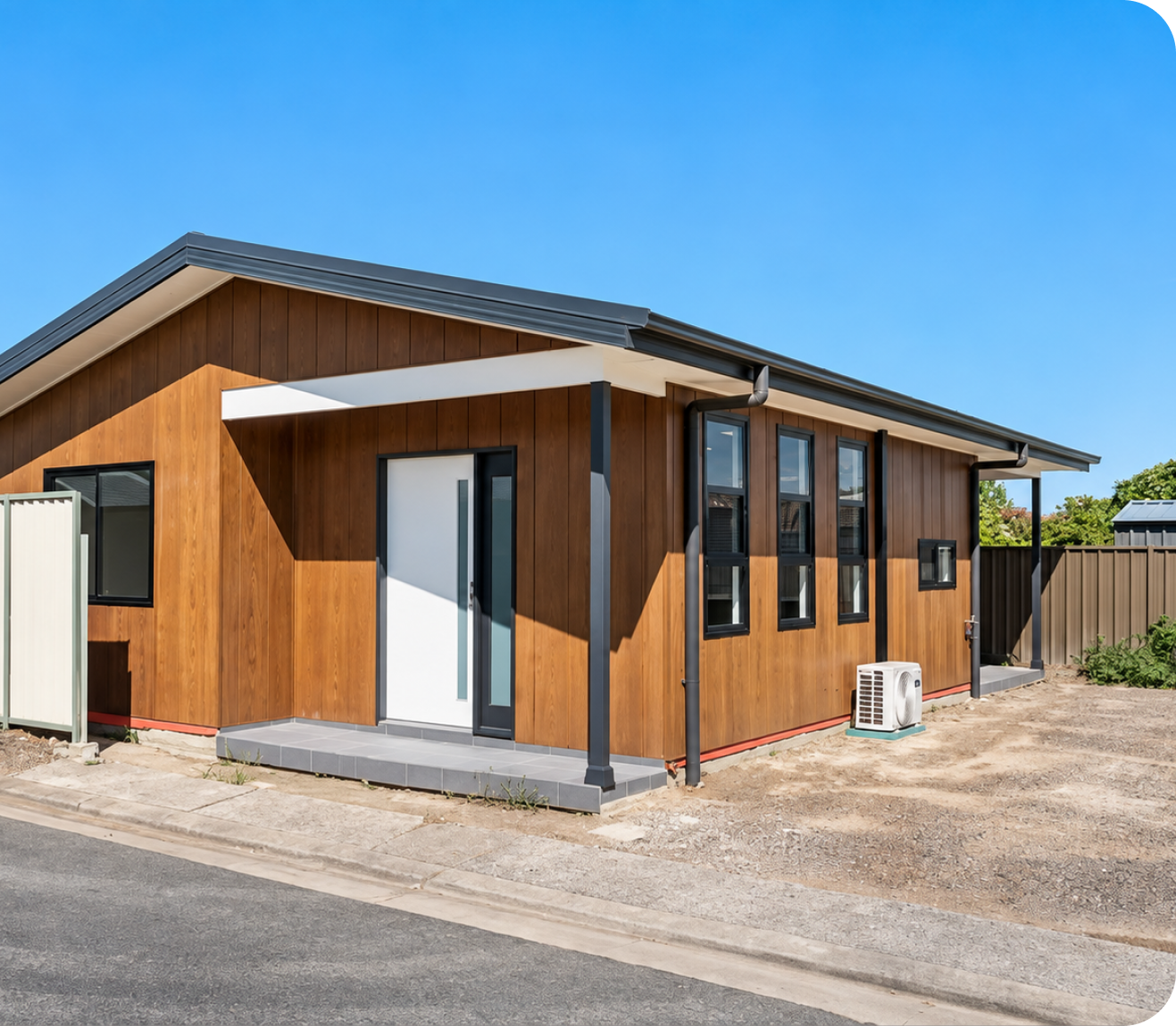
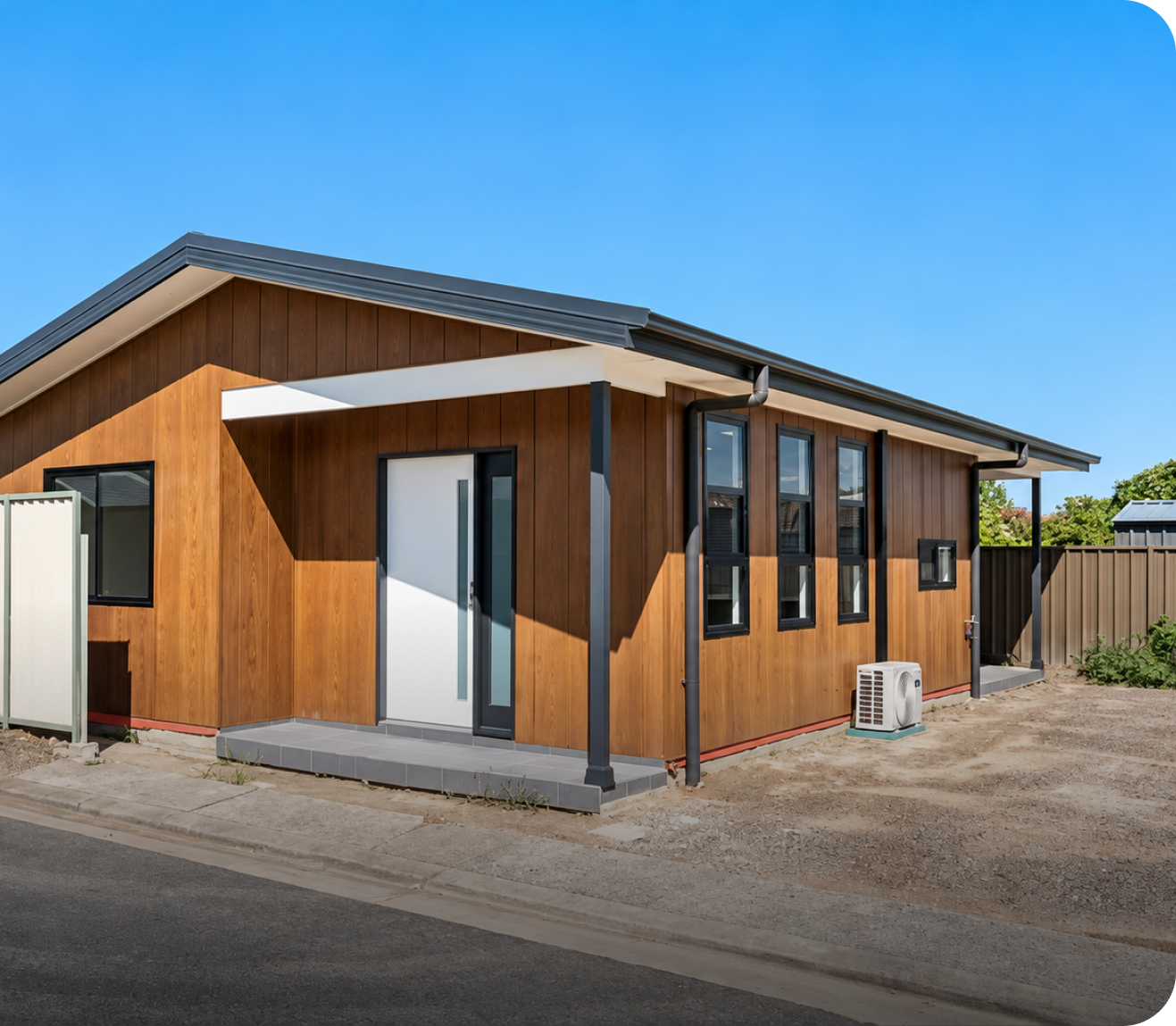
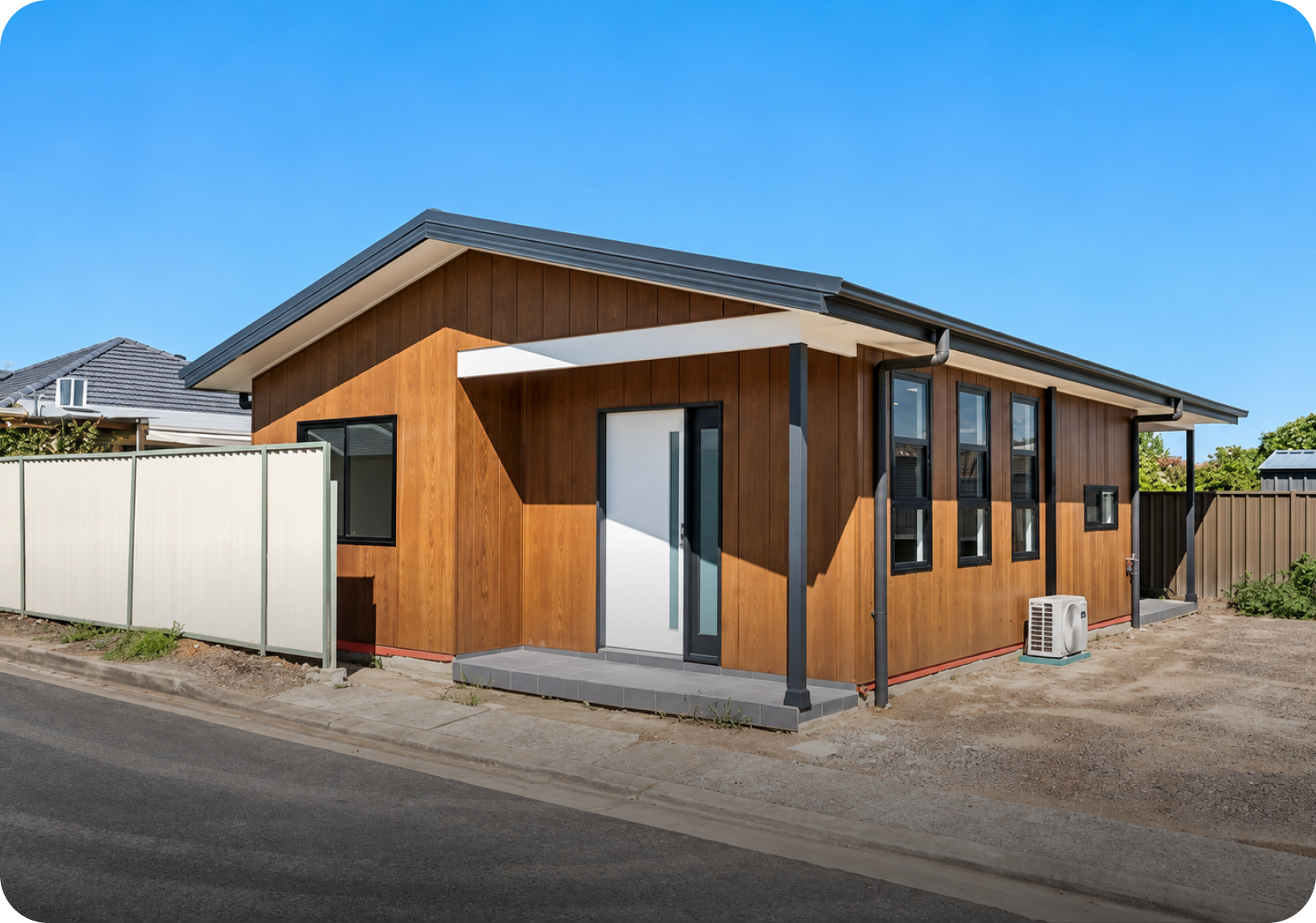
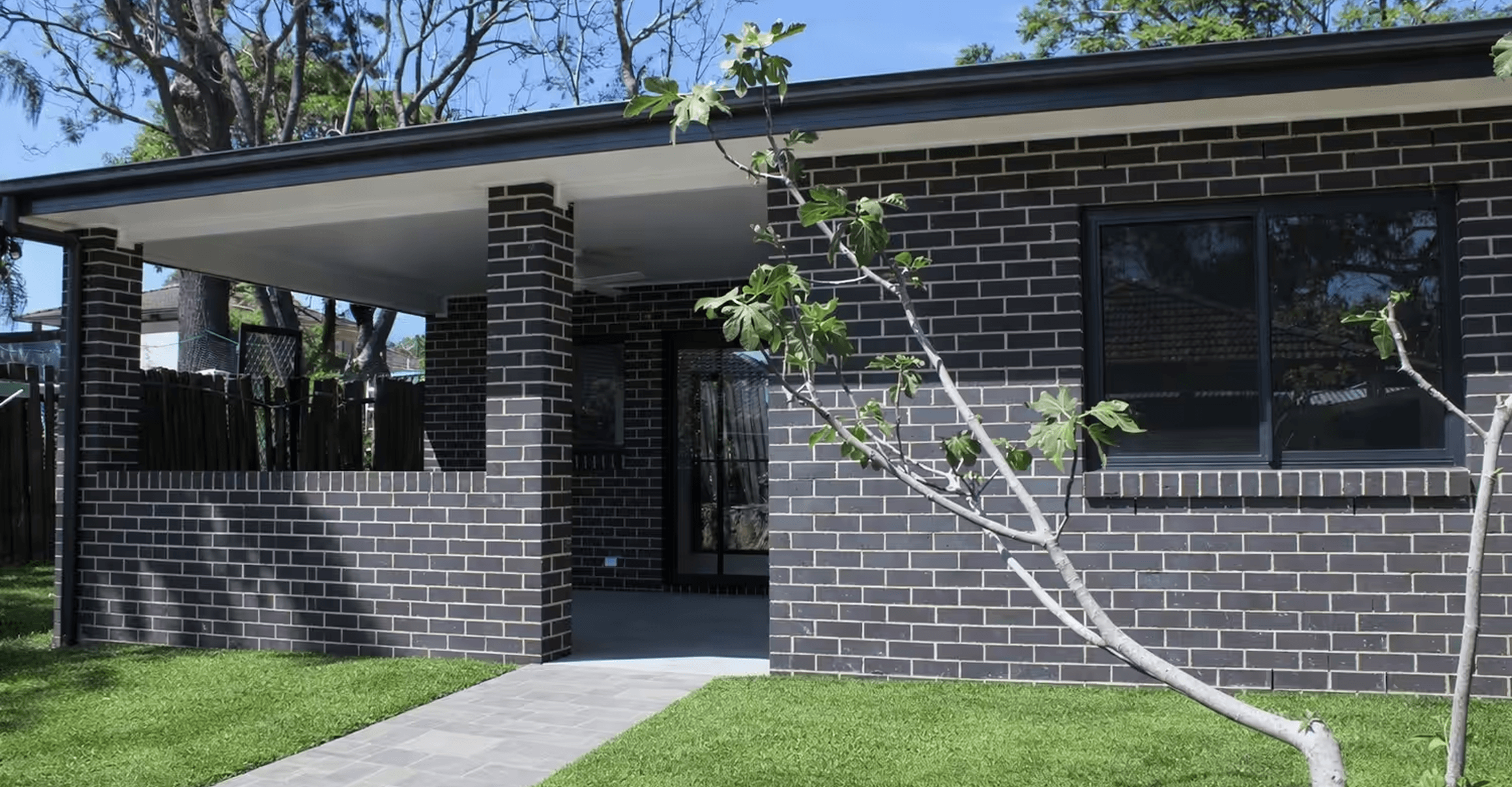
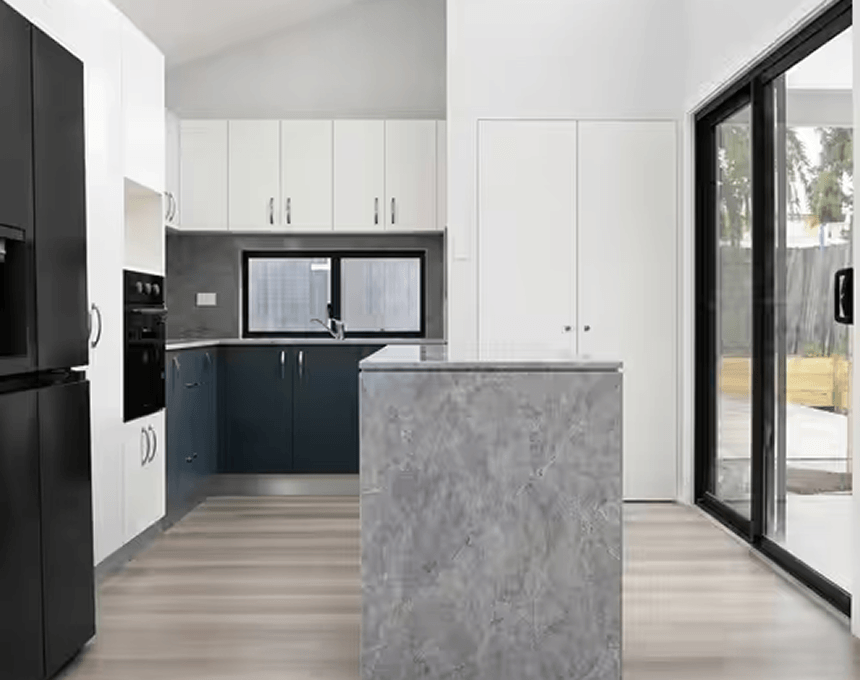
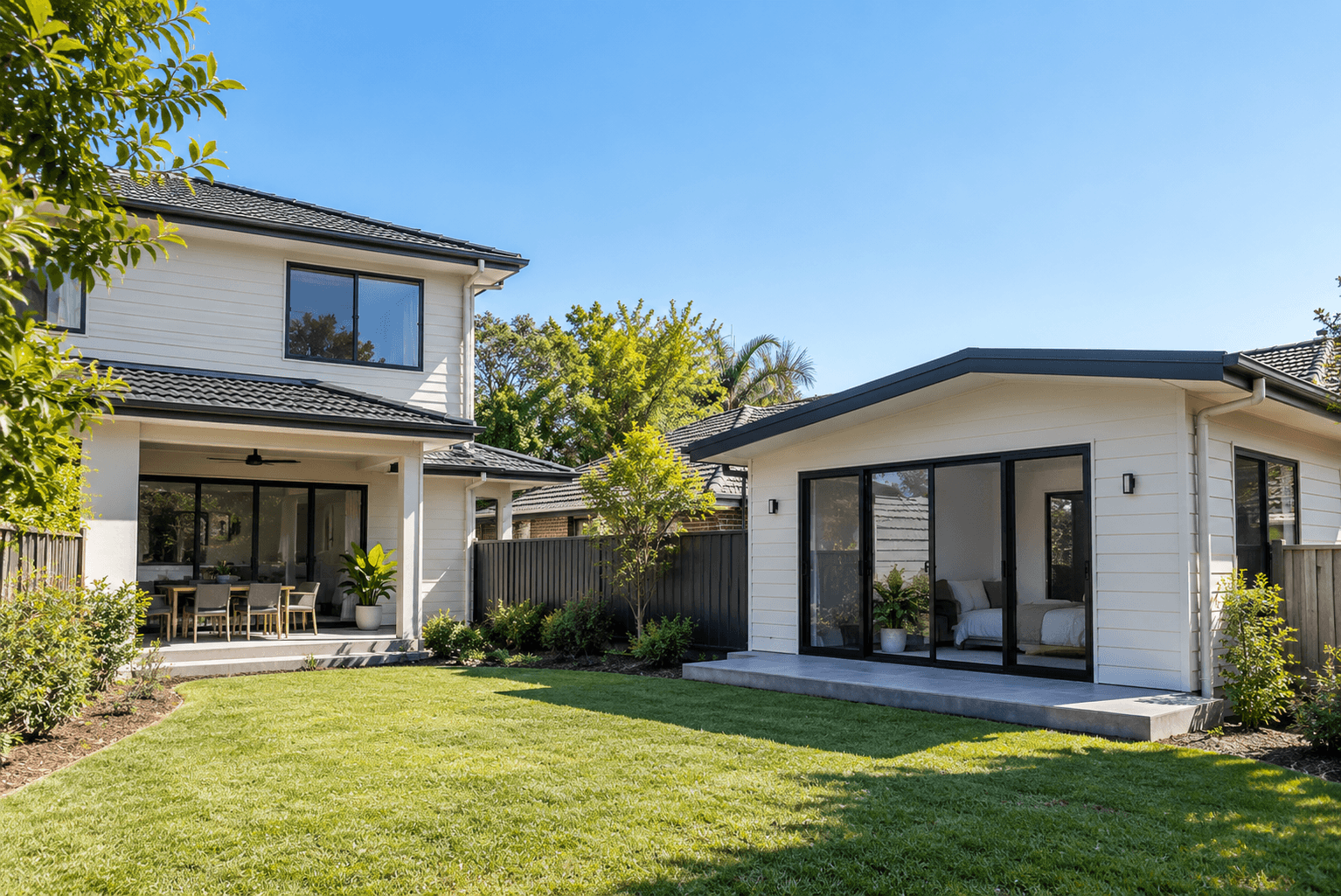
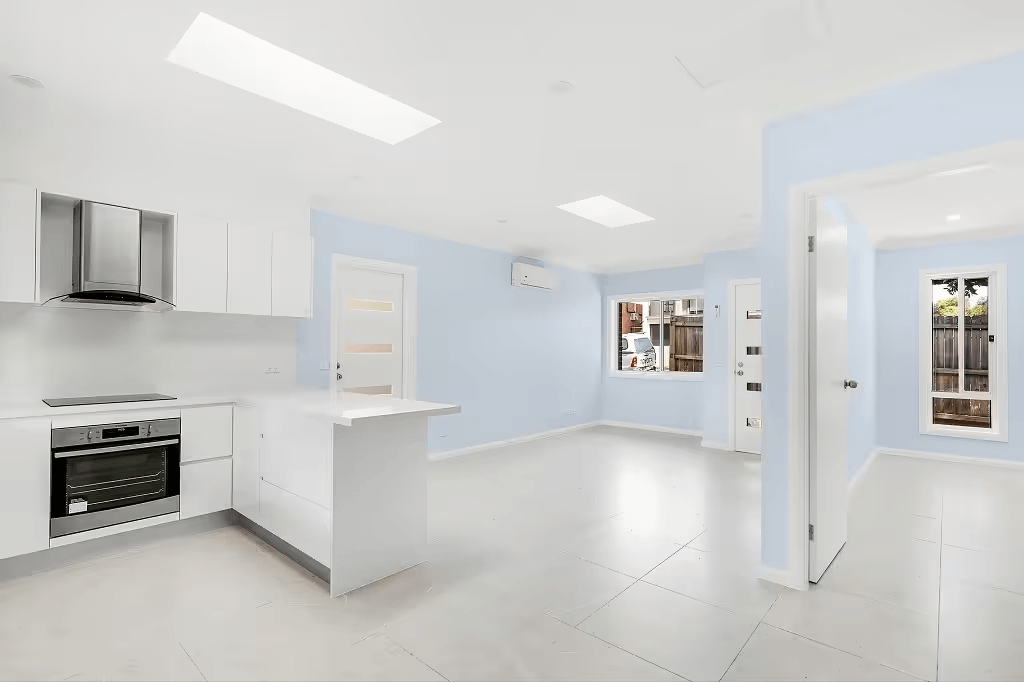
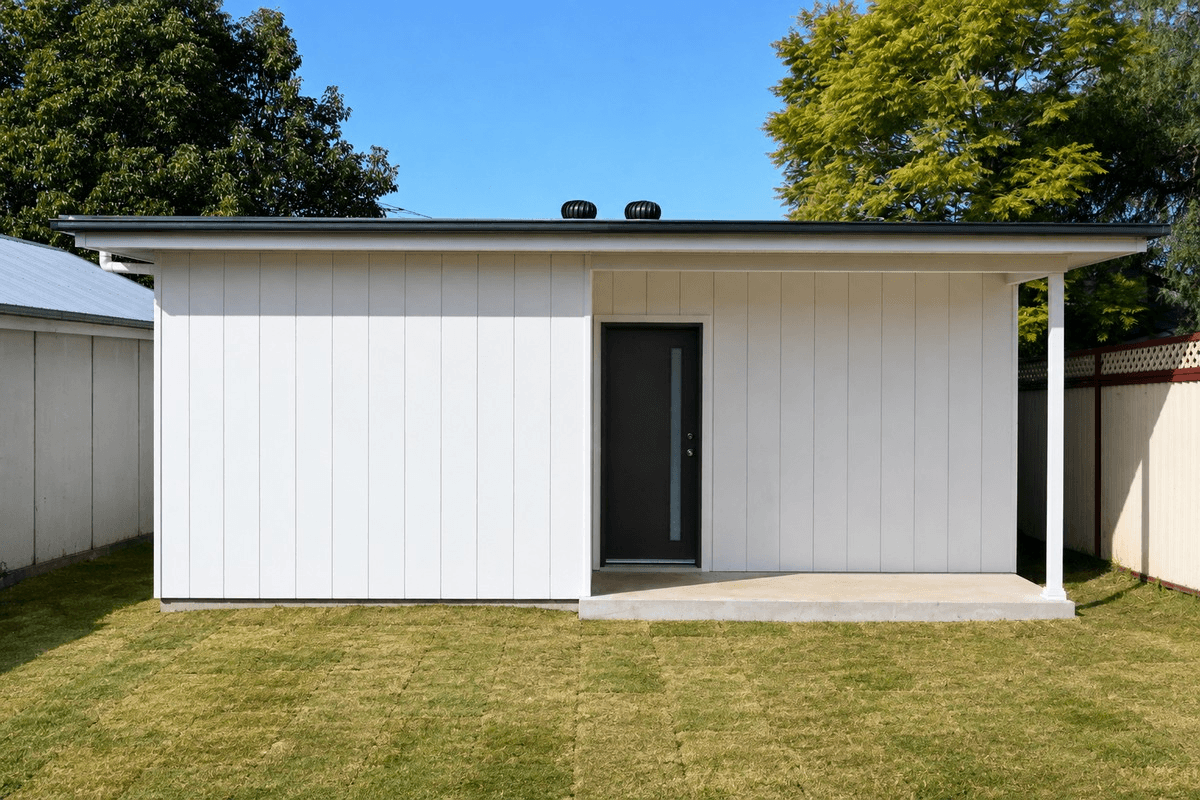
Nine completed granny flats wholly inside Canterbury-Bankstown, all photographed on this site: Bankstown, Belfield, Campsie, Chester Hill, East Hills, Padstow, Panania (2) and Yagoona.

We have built 8 more in Beverly Hills, Kingsgrove, Narwee and Greenacre. Those 4 suburbs straddle a council boundary, so which council assessed each job comes down to the individual address. We would rather say that than count them all as Canterbury-Bankstown work.

Seventeen builds in and around this council area either way, and the approval process is the one your block will go through.

Frequently asked questions

Can I build a granny flat bigger than 60 m² in Canterbury-Bankstown?

Only if your existing house is larger than 600 m² of floor area. Clause 5.4(9) of the LEP allows the greater of 60 m² or 10% of the principal dwelling, so the 10% option only wins on a very large home. For most blocks the answer is no, and 60 m² is the cap.

How much are council contributions on a granny flat here?

For most of the LGA, $5,638.72 for a studio or one bedroom, $9,030.12 for 2 bedrooms and $12,236.45 for 3 or more, as at the June 2026 quarter. Bankstown City Centre and Campsie Town Centre are slightly higher. The rates are indexed quarterly.

Why are the rules different depending on my suburb?

Because the council was formed by a merger and still runs 2 development control plan chapters, one for the former Bankstown area and one for the former Canterbury area. The former Bankstown chapter is much more prescriptive.

Does Canterbury-Bankstown limit granny flats to 2 bedrooms?

No. We could not find any bedroom limit in either DCP chapter. The claim appears on several granny flat websites and does not match the council’s own controls

Do I need council approval, or can I use a private certifier?

Both routes exist. If your block meets every standard in the state Housing SEPP, a private certifier can issue a complying development certificate without going to council. If it does not, you lodge a development application with Canterbury-Bankstown, which is assessed on merit.

My block is in a heritage conservation area. Can I still build

Usually yes, with more constraints. A detached granny flat must be single storey, sit behind the house, not be visible from the street, and keep at least 6 m separation from the main dwelling.

Find out what your Canterbury-Bankstown block allows

The rules above are the council layer. The state rules on setbacks, frontage and landscaped area sit underneath them and are tiered by lot size.

Working out which combination applies to your block takes your survey, your title and your planning certificate.

Building granny flats since

Since 2012

Builder licence

247388C, verifiable through NSW Fair Trading

Industry body

Housing Industry Association member

MBA NSW Excellence in Housing Awards

Winner 2021, Winner 2023, Finalist 2020

Completed granny flats documented on this site

70+

Approvals

CDC and DA, both managed in-house

Pricing

Fixed price after a site assessment, 2-bedroom from $134,990

BlueGum Granny Flats is a licensed NSW builder, licence number 247388C, and a member of the Housing Industry Association. Setback, frontage and landscaping figures are drawn from the State Environmental Planning Policy (Housing) 2021 as in force in August 2026 and are general information, not planning advice. Other planning instruments applying to your land can vary them. Confirm the requirements for your block with a certifier or your council. Cost ranges are drawn from published 2026 Sydney market guides and are not a quote.
Check my block Call 1300 060 651